The junction the city is named for
Kuala Lumpur means muddy confluence in Malay, and the confluence is still there. The Klang comes down and the Gombak runs into it under the walls of the Jamek mosque, and this Kuala Lumpur vacation package keeps you four nights inside walking distance of that corner. The water runs between concrete banks now and gets lit at night. Stand on the bridge at dusk and you are looking at the reason the city sits here.
The padang at Merdeka Square is the field the colonial club kept for cricket. At midnight on the thirtieth of August 1957 the flag of a new country went up at its southern end, where a round black marble plaque now marks the spot; the declaration itself was read next morning at a stadium elsewhere in town. Arthur Benison Hubback drew the mosque, had a hand in the Sultan Abdul Samad building of 1897, and drew the old railway station.
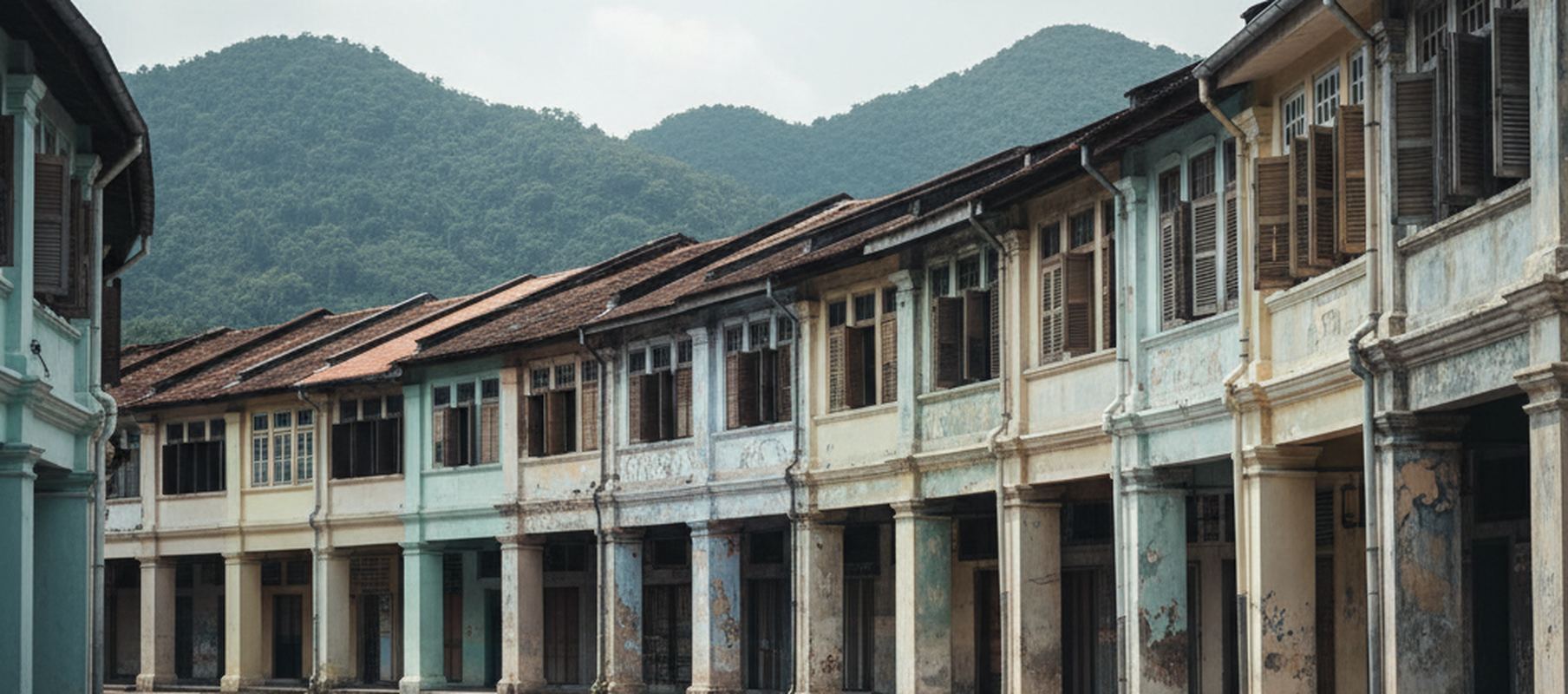
Walking it is the work of the trip. Distances look short on a map and the heat is not short. You cross a road that has no crossing on it for a block either way, the sidewalk gives out at a driveway, and a covered five foot way under the shophouses carries you the rest. Most mornings you will be out by seven and done by eleven.
Market halls, and eating standing up
The largest wet market in the city is at Chow Kit, in the hall called Bazaar Baru Chow Kit, between Jalan Raja Laut and Jalan Tuanku Abdul Rahman. Fish on crushed ice, chickens being jointed, whole stems of green bananas, long beans in bundles, durian when it is in season. Go early. This is morning work, and by afternoon it is a different and quieter room.
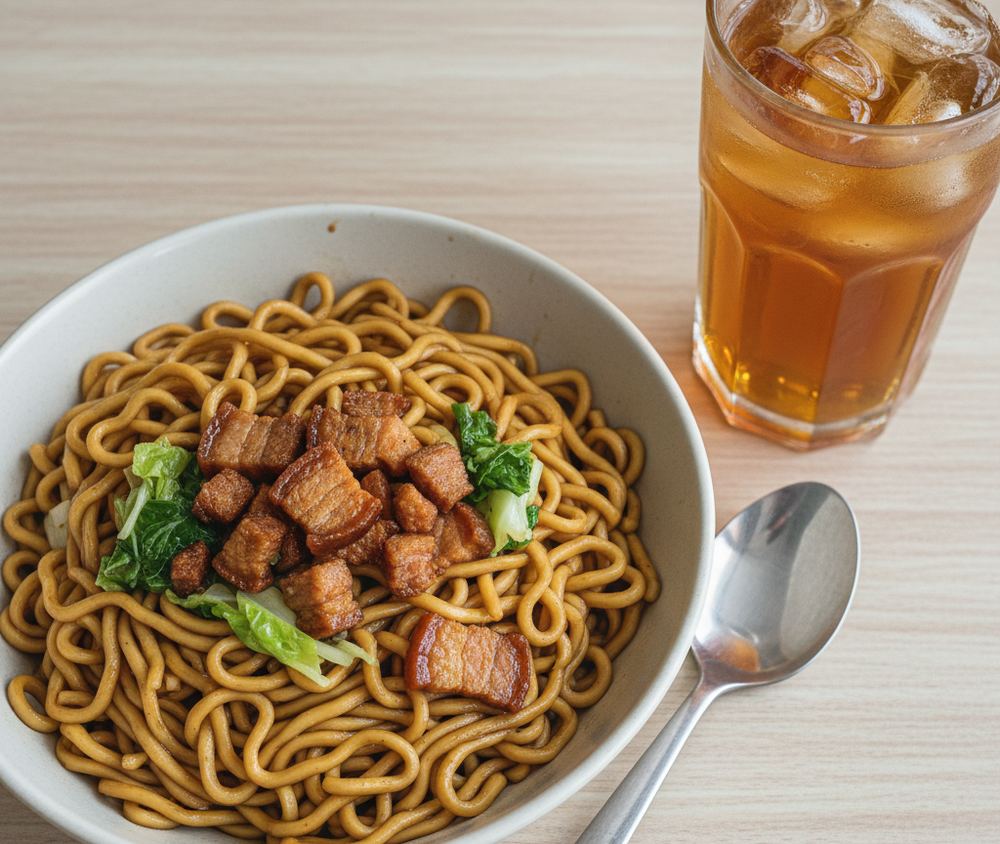
Chinatown cooks on the street. Jalan Petaling itself sits under a green roof put up in 2003 and sells souvenirs more than dinner now, but the lanes off it and around Jalan Cheng Lock still work. The city dish is hokkien mee: thick yellow noodles braised in dark soy with pork, squid, fish cake, cabbage and cubes of fat fried crisp. A hawker on Petaling Street is credited with it in 1927.
Kampung Baru is the Malay quarter across the river, gazetted as an agricultural settlement in 1950 and still wooden houses on posts under the office towers. Jalan Raja Muda Musa and Jalan Raja Alang are where you eat: nasi lemak in banana leaf, satay off charcoal, grilled fish. Jalan Alor, parallel to Jalan Bukit Bintang, runs Chinese and Thai stalls and goes later than either.
Temples and mosques, all within a short walk
Sri Mahamariamman on Jalan Tun H.S. Lee was founded in 1873 by K. Thamboosamy Pillai and is the Hindu temple the city grew around. The five tiered gopuram over the door was finished in 1972, stands about twenty three meters, and carries two hundred and twenty eight sculpted figures cut by a craftsman from Tamil Nadu. Shoes come off at the rack outside. Photography rules differ by shrine, so look before you lift a phone.
A short walk away on Lebuh Pudu is Sin Sze Si Ya, put up in 1864 by Yap Ah Loy, the oldest Taoist temple here. Fire and flood took it and it was rebuilt between 1881 and 1883; the country listed it as heritage in 2020. It is small, dark, thick with incense smoke, and people are praying in it while you stand there, which changes how long you want to stay.
The Jamek mosque had its foundation stone laid in March 1908 and opened in December 1909, Hubback again, sitting right on the water junction; it was renamed the Sultan Abdul Samad Jamek Mosque in 2017. The national mosque of 1965, a short walk from the old railway station, is the other one: a concrete roof folded into sixteen points, a minaret of seventy three meters, room for fifteen thousand. Both post visiting hours that sit between prayers and run shorter on Friday.
Gardens, a surviving forest, and two museums
The lake park opened in 1888 as the public gardens, became the lake gardens, and now runs to about ninety two hectares of lawn, water and planted collections, including a hibiscus garden and an orchid garden. It is a park for a Malaysian morning rather than a European afternoon: shade, slopes, and a lot of ground between one thing and the next.
On Bukit Nanas, a hill inside the built up city, sits a forest reserve gazetted in 1906. It was seventeen and a half hectares then and about nine remain; the rest went to buildings. There are jungle trails, a visitor center and a forestry museum. The trails are short and steep, the ground is root and mud, and the steps turn slick within minutes of rain, which does not need much warning here.
Two museums are worth a whole morning each. The Islamic arts museum on Jalan Lembah Perdana opened in December 1998, holds more than seven thousand objects across twelve galleries, and keeps a restored Ottoman room from the early eighteen hundreds plus a hall of scale models of mosques. The national museum on Jalan Damansara opened on the thirty first of August 1963, built in the shape of a Malay palace, with mosaic murals across the whole front.
The one morning that runs to a clock
North of the city a limestone hill holds a Hindu cave temple finished in 1891. Two hundred and seventy two concrete steps were built in 1940 and they are still the way up, open to the sky the whole climb. At the foot stands a gold painted statue of Murugan, 42.7 meters, unveiled in January 2006. Keep bags closed on the stair: the macaques there have learned to open them.
This is the only fixed clock in the four nights. The ride is a public electrified commuter train and the hill has been the end of that line since December 2015; counting from the central station it is eight stations, through the old railway station, Bank Negara, Putra, Sentul, Batu Kentonmen, Kampung Batu and Taman Wahyu. Departures are posted at the platform and change by day of week. Read the board for the last one back before you climb.
Who should skip this. Knees decide it: 272 up and 272 down, then four days of broken sidewalk and heat that does not let go after dark. If you want cool air, a lift, a quiet room at noon and a plan that someone else keeps for you, four nights on foot here will grind. Anyone unwilling to eat at a counter with a wet floor runs out of choices by the second day.
What here answers to somebody else and not to you
- One thing in the four nights runs to a published clock: the commuter train north to the cave temple. Everything else on this page opens on its own hours and holds nothing for you.
- It is electrified public rail on a branch that ends at the hill, eight stations out from the central station, and that terminus has been in place since December 2015.
- Departures are posted on the platform board and differ between weekdays, weekends and public holidays. We send you the current sheet in the week you travel, and we will not quote you a time we have not read that week.
- Check the last train back before you start up the steps, not after. The climb takes longer than most people plan for.
- In January or February the Thaipusam festival brings the silver chariot up from the Chinatown temple and the whole hill changes scale. If your dates land on it, the ordinary way of visiting does not apply, and we will say so before you reserve.
The hatching beside each price says how much of the trip runs to somebody else's timetable: one line for none of it, four for a trip built around fixed departures from the first morning to the last.
What the figure holds and what it leaves to you
Held inside the figure
- Four nights in a mid range city hotel room with breakfast, priced per person with two to a room, inside walking reach of the water junction.
- Airport transfer in both directions by private car, with the driver meeting you inside the arrivals hall rather than at a curb.
- One guided morning on foot through the old shophouse blocks, the padang and the two temples, three to four hours, in English.
- A written sheet of opening hours for the markets, the mosques and the museums, checked in the week you travel, with the weekday closures marked.
- Luggage held at the desk on departure day, and a later checkout on the fourth day where the property allows one.
- A written contact for the office during Malaysian working hours across the four nights, for changes made once you are there.
Left outside it, on purpose
- Getting to Malaysia and home again. This office arranges nothing in the air and nothing at sea, and the price begins once you are standing in the country.
- The train north, and every other public ride inside the city. You buy those yourself on the day, because we do not hold seats on a public service.
- Lunch and dinner. The eating here happens at stalls and shophouse counters and is paid in cash, and pricing it in advance would be invention.
- Admission to the museums, to the paid cave beyond the main stairway, and to the forest visitor center on the hill.
- Drinks, laundry, tips and anything carried out of a market, plus any room night before the first or after the fourth.
- Single occupancy, which carries a supplement quoted on request, and any third person in the room, which is priced separately.
A price on this site covers the ground only: the rooms, the named transfers between them, and the people who meet you. It does not cover getting to the country or leaving it.
Nothing is held until you have written confirmation from the office naming the property, the four dates and the price per person, and no card details are taken on this site.
The months this one is worth the journey
It rains here in every month of the year. The city takes at least 2,600 millimeters annually, and the driest stretch, roughly June through August, still clears 131 millimeters in a month. Afternoon thunderstorms are the pattern rather than the exception, which is not the same thing as a forecast; this is one of the places on earth where thunderstorms are counted most often, and the center floods after a heavy one. Give the mornings to the streets and the afternoons to a museum or a fan.
October and November are the wettest, near 284 and 356 millimeters. The city works straight through it, but the stair north turns slick and the afternoons go. Smoke drifting from fires on Sumatra and Kalimantan settles over the valley in some years, and no month rules that out. Two calendar items matter more than rain: Chinese New Year closes much of Chinatown for several days, and the Muslim holidays move about eleven days earlier each year, so check them against your own dates and not against last year's.
What this one will join to
- Kuala Lumpur and Melaka vacation package, Scheduled coach, expressway, About 2 hours 15 minutes
- Kuala Lumpur and Kuala Selangor vacation package, Road. A car with a local driver, northwest out of the city to the coast. No flight, no boat, no train., About eighty minutes when the road is moving. Allow two hours if the car leaves after the middle of the afternoon.
- Kuala Lumpur and Ipoh vacation package, Electric intercity train, west coast line, KL Sentral to Ipoh station, Two hours on the services that stop least, about two hours thirty five minutes on the ones that call at a dozen stations. The distance is roughly 181 km.
Send us your dates and we will come back with what is open, what it costs per person, and what the train board looks like in that week.
Asked about this one more than once
- What should I wear for the temples and the mosques?
Knees and shoulders covered at all of them, and shoes come off at the door of the Hindu and Chinese temples, so slip ons save you a lot of bending. The mosques post visiting hours that sit between prayers and run shorter on Friday, and they apply a dress rule at the entrance. Cotton rather than synthetic, because you will sweat through whatever you choose.
- Is the climb at the cave temple hard?
Two hundred and seventy two concrete steps, laid in 1940, open to the sky, in heat. There is no lift and no other route to the main cave. Carry water and carry nothing loose in your hands. The unlit cave beyond the temple is not a walk in; access there is restricted and runs through organized nature society trips rather than the front stair.
- Do you arrange our flights?
No. This office arranges nothing in the air and nothing at sea, anywhere, and it is not something we take on by request either. The $1,290 is per person for arrangements on the ground once you have reached the country, based on two to a room, and a single traveler pays a supplement we quote on request.
Reserve a month rather than a date
Tell the office which month you have in mind and it will answer with what that month makes possible and what it shuts.