What the two nights hold
This Kuala Selangor vacation package is two nights at the point where the Selangor river finishes and the Strait of Malacca begins, about fifty five kilometers northwest of the capital and roughly an hour on the expressway. You sleep in the old town, climb one low hill, walk one boardwalk laid over mud, eat on the far side of a bridge, and take a boat onto the river once the light has gone.
The price is 680 dollars a person and it assumes two of you in one room. It covers ground arrangements and nothing else. No part of it moves you to Malaysia or across any water, because this office arranges no flights and no passage by sea. You are paying for a room, a car and driver on this coast, the entries, and somebody who has worked out what order the days go in.
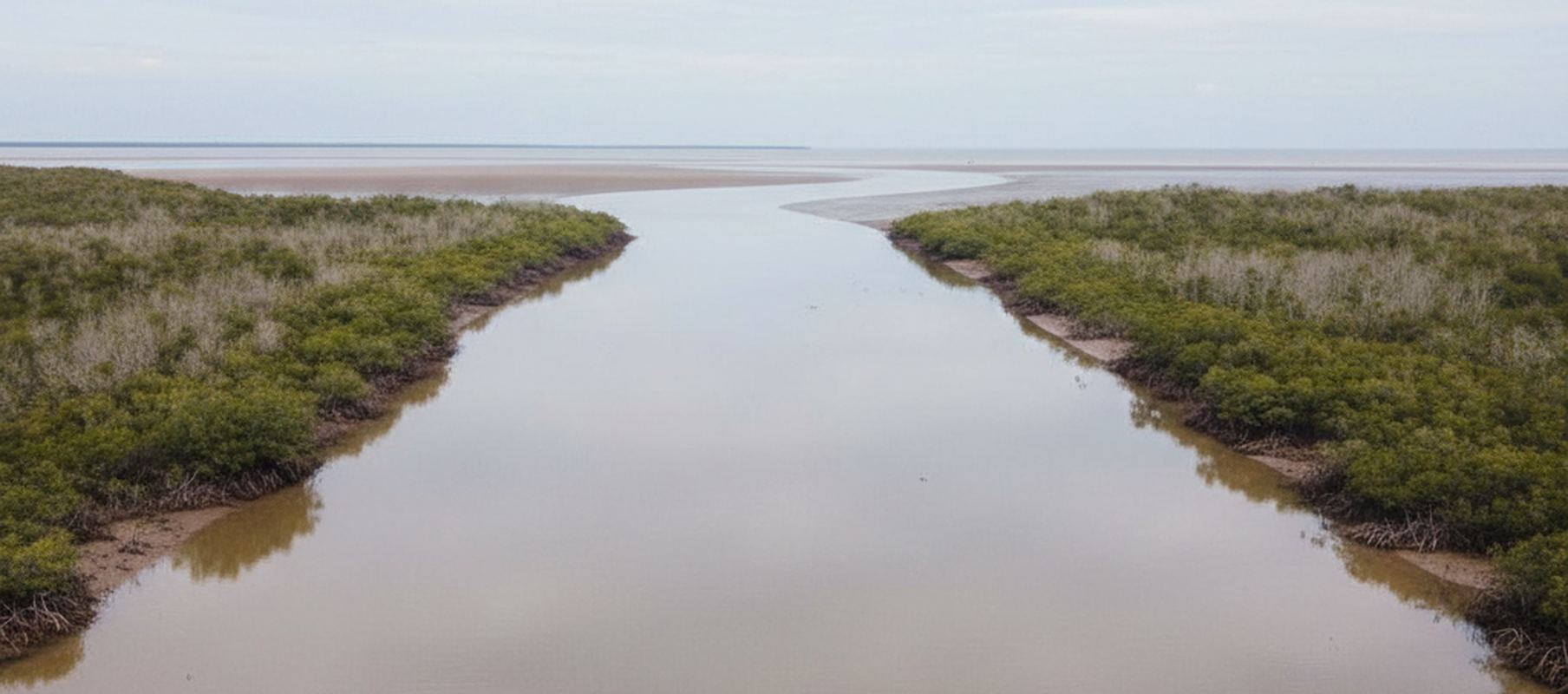
Two nights is the right length and a third would be padding. The town is small. The hill takes a morning if you are slow about it, the wetland park takes another, and what is left is eating and driving between rice blocks. If you want sand, this is the wrong coast. The shore here is gray mud and mangrove, and that is the whole reason to come.
After dark on the water
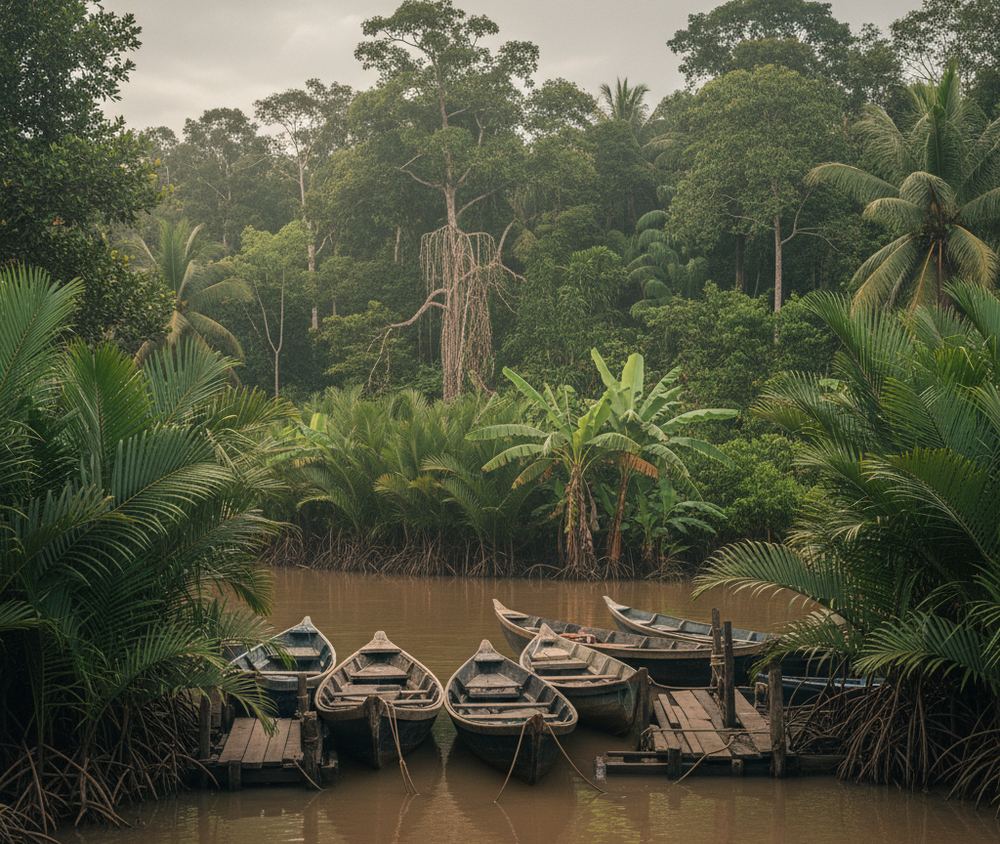
Seven kilometers upriver from town, at Kampung Kuantan, wooden sampans are rowed out onto the Selangor river between half past seven and half past ten at night. The trees they head for are berembang, Sonneratia caseolaris, a mangrove that grows wild along the bank and wants wet, swampy ground. The beetle that gathers in them is Pteroptyx tener, six millimeters long, flashing in unison at something near three flashes a second.
None of that is promised to you. These are live insects, and how many sit in the trees on a given night turns on the time of year, on how much rain has come down, on what the river is doing and on the condition of the mangrove itself. There are nights when a boat goes upstream and comes back having seen very little. The sanctuary shut for days in December of 2025 because the weather would not allow it, and it closes now and then for maintenance work.
The boats are not ours. They belong to boatmen licensed to work the sanctuary jetty, who row them, set their own conditions of carriage and can decide not to go out. A ticket buys a boat, up to four people, rather than a seat, so two of you either take one between you or sit with strangers. Tickets are sold at the counter on the night. Take the rower's word on lights and noise.
Bukit Malawati, and the awkward business of getting up it
The hill stands right over the river mouth and has been fought over since the sixteenth century, when Malays built the first fort on it. The Dutch took it in 1784 and renamed it Fort Altingsburg after Willem Arnold Alting, who governed the Dutch East Indies. Sultan Ibrahim Shah took it back the year after. The Selangor Civil War in the nineteenth century finished off most of what had stood there.
So do not climb up expecting a fort. What is still there is a short whitewashed lighthouse the Dutch began in 1794 and the British rebuilt, reopening it in 1910, and it remains a working light. There is Batu Hampar, a flat slab of rock roughly five feet square that was used for executions, and Perigi Beracun, a well once filled with irritants and now covered over with iron grating.
The Selangor silvered langurs live on the slope, dark with a crest, and their young are born bright orange and take three to five months to turn. Long tailed macaques work the same trees and take a closer interest in bags. Neither keeps a schedule. Getting up is the fiddly part: the tram runs Saturdays, Sundays, public holidays and school holidays, and on an ordinary Tuesday you walk or you drive.
Taman Alam, and what the tide decides
Five minutes on foot from the old town bus stop, on Jalan Klinik, there is a wetland park run by a national conservation society. It offers three routes: a main trail of about 550 meters through secondary forest, a bund trail of 1.7 kilometers around a man made lake held off the river by a water lock, and a walkway of about 1.5 kilometers running out into the mangrove. Two towers look over it.
Ninety eight resident bird species have been recorded here and fifty seven migrants, among them milky storks, herons, kingfishers and plovers, along with otters, macaques and langurs. Recorded is not the same as present on the morning you turn up. Go in expecting mud, breathing roots pushing up through it and the undersides of leaves, and count anything past that as luck.
The walkway answers to the tide. It crosses ground the sea covers and uncovers twice a day, and high and low water slide about fifty minutes later each day, so the hour that works on your first morning is not the hour that works on your second. It is hot, still and full of mosquitoes. The visitor center opens at nine in the morning and closes at six.
Pasir Penambang, and the flat land behind it
Over the water from town, on the north bank, sits Pasir Penambang. The name keeps the memory of the penambang, the ferry people used before the road bridge went in at the end of the 1970s. Now you cross in two minutes. The eating is along Jalan Besar, Chinese style seafood in shops that open at eleven in the morning and run through to midnight, with tanks out front and fish sold by weight.
It is a working fishing village first and somewhere to eat second. Trawlers unload, the drains behind the shops smell of it, and stalls shut when they are done rather than at a posted hour. There is a soto stall further along the same road if nobody in your party wants fish. Ask the weight and what that comes to before you agree to anything out of a tank.
Inland the land flattens out and goes green. Tanjong Karang is a rice mukim split by the Sungai Tengi, watered by a canal the drainage department cut in 1953 to run water toward the Bernam and turn swamp into fields. Locals call it the bangkenal. Whether you find bare stubble, sheet water or a standing crop depends entirely on where the planting cycle has got to, and nobody arranges that for visitors.
What here answers to somebody else and not to you
- The firefly sanctuary at Kampung Kuantan runs nightly from half past seven to half past ten in the evening, and tickets are bought in person at the counter rather than ahead.
- The tram up Bukit Malawati runs Saturdays, Sundays and public holidays from nine to six with a last pickup at half past six, and in school holidays Monday to Thursday nine to four with a break from one to two, Friday nine to noon and three to four. On other weekdays there is no tram.
- The visitor center at Taman Alam Kuala Selangor opens at nine in the morning and closes at six in the evening.
- The walkway into the mangrove works with the tide, and the tide runs roughly fifty minutes later each day, so the useful hour moves between your first morning and your second.
- Both the hill and the sanctuary close for a day or two around Hari Raya Aidilfitri, and the sanctuary also shuts at short notice for maintenance or weather.
The hatching beside each price says how much of the trip runs to somebody else's timetable: one line for none of it, four for a trip built around fixed departures from the first morning to the last.
What the figure holds and what it leaves to you
Held inside the figure
- Two nights in a small, plain room in or beside the old town, two people sharing
- Road transfer out from the capital and back again by the expressway
- A car and driver for both full days, including the run inland and the crossing to Pasir Penambang
- Entry to Taman Alam Kuala Selangor and use of its three trails
- Entry at Bukit Malawati, plus the tram ticket on days the tram is running
- Seats held for one evening at Kampung Kuantan with the boatmen licensed to work the jetty
Left outside it, on purpose
- Every flight, in both directions, and any passage by sea at any stage of the trip
- Getting yourself to Malaysia, which you arrange on your own account
- All meals and drinks, the seafood at Pasir Penambang included
- A room to yourself, which carries a supplement over the shared room price
- Going back out on the river a second evening if the first one comes to nothing
- Tips to the rower, laundry, and whatever you buy from the dried fish stalls
A price on this site covers the ground only: the rooms, the named transfers between them, and the people who meet you. It does not cover getting to the country or leaving it.
We hold the room, the driver and seats for one evening at the sanctuary, then send you one page carrying the running order, the posted hours and the tide times that fall across your two nights.
The months this one is worth the journey
There is no northeast monsoon here in the way the far coast gets one. This is the Strait of Malacca side, and the rain tends to arrive as squall lines that build over Sumatra and cross the water. They are most frequent from about April to November, they usually form before dawn or early in the morning, and they pass in an hour or two with heavy rain and a hard gust. A wet start does not settle what the evening does.
The broader, steadier rain falls in the inter monsoon stretches, roughly April and May and then again in October and November. June through August is the drier run, and late January into February usually holds. None of that is a forecast and you should not plan as though it were. What matters more is that the river boats do not go out in a storm, and the sanctuary has closed for days at a stretch when the weather would not let it work.
What this one will join to
- Kuala Lumpur and Kuala Selangor vacation package, Road. A car with a local driver, northwest out of the city to the coast. No flight, no boat, no train., About eighty minutes when the road is moving. Allow two hours if the car leaves after the middle of the afternoon.
Tell us the dates you are looking at and we will put the two nights together and send the price in writing before anything is held.
Asked about this one more than once
- Will we see the fireflies?
We cannot say, and anyone who tells you otherwise is selling you something. Pteroptyx tener is a live insect. How many gather on a given night turns on the time of year, the rain, what the river is doing and whether the berembang along that stretch of bank is in good condition. Some nights the trees carry a lot of light and some nights they carry almost none. You are paying for the trip out, not for a result.
- Who runs the river boat, and who is answerable for it?
Boatmen licensed to work the sanctuary run it. They own the sampans, they row them, they set their own conditions of carriage and they can decline to go out. We hold seats and tell you when to be at the jetty. This office arranges no passage by sea anywhere in the itinerary, and the river trip belongs to them rather than to us.
- Who would find these two nights hard going?
Anyone who needs a fixed outcome. Also anyone who dislikes heat with no wind in it, biting insects on the walkway, sitting still in the dark in a small boat, or the smell of a working fish jetty. Children who cannot stay quiet for an hour will not enjoy the river, and nor will the people sharing the boat with them.
Reserve a month rather than a date
Tell the office which month you have in mind and it will answer with what that month makes possible and what it shuts.