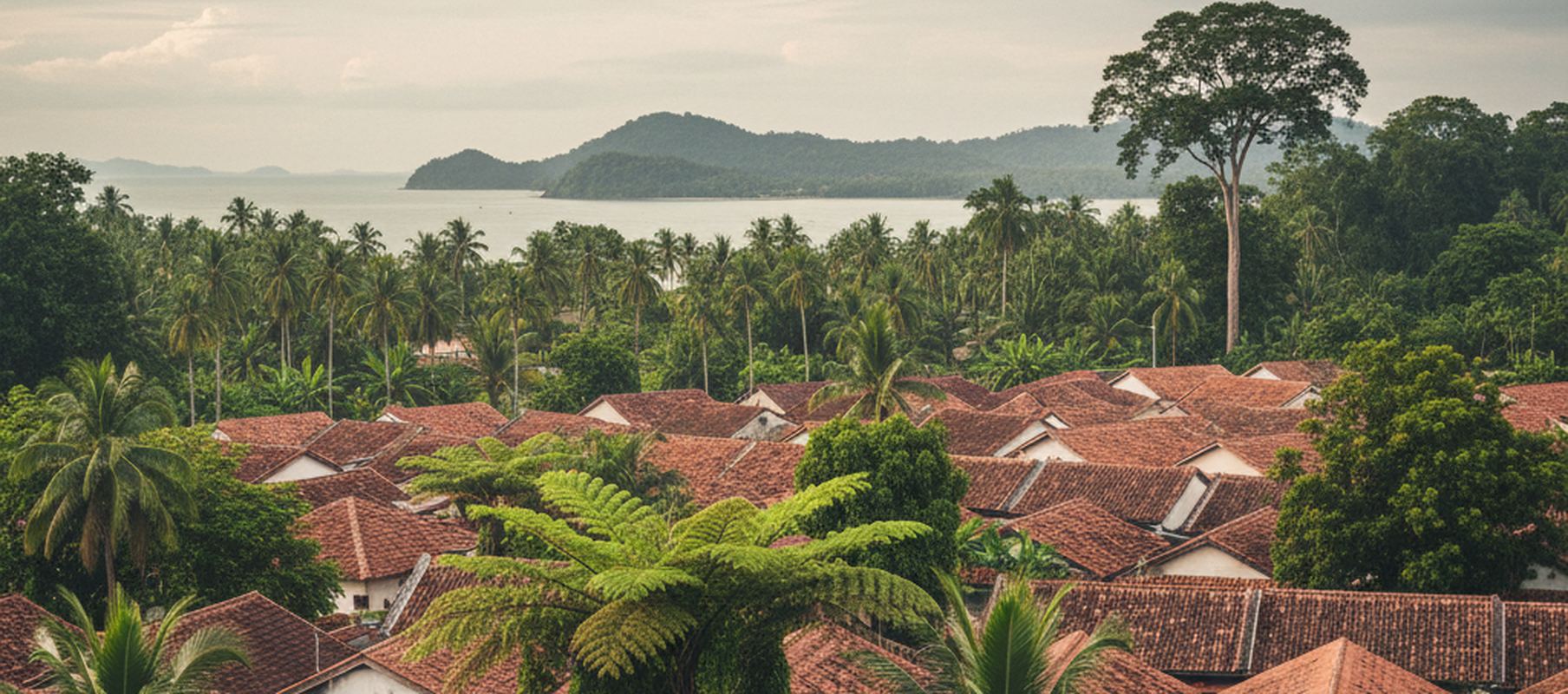
Five nights in George Town
The Penang and Ipoh vacation package starts with five nights inside the old quarter, which is to say you can walk to most of what you came for. The grid is small. Shophouses stand shoulder to shoulder with their shutters up, five foot ways run under the upper floors, and you cross from a Chinese temple to an Indian street to a mosque in ten minutes on foot.
Two of those nights go on eating standing up. The stalls come out on the same corners at the same hour, each cook doing one dish only, so dinner gets assembled from four of them and eaten at a shared table. Down on the waterfront, whole settlements sit on stilts over the strait, one family name to each plank walkway, and people still live in the houses along them.
The hill behind town is the one day you leave the grid. A funicular climbs a little over two kilometers from Air Itam to the upper station; the ridge reaches 833 meters, and the reason people ride it is the temperature. You can walk instead, up the jeep track in two to three hours, which is honest work in that heat and not for everyone.
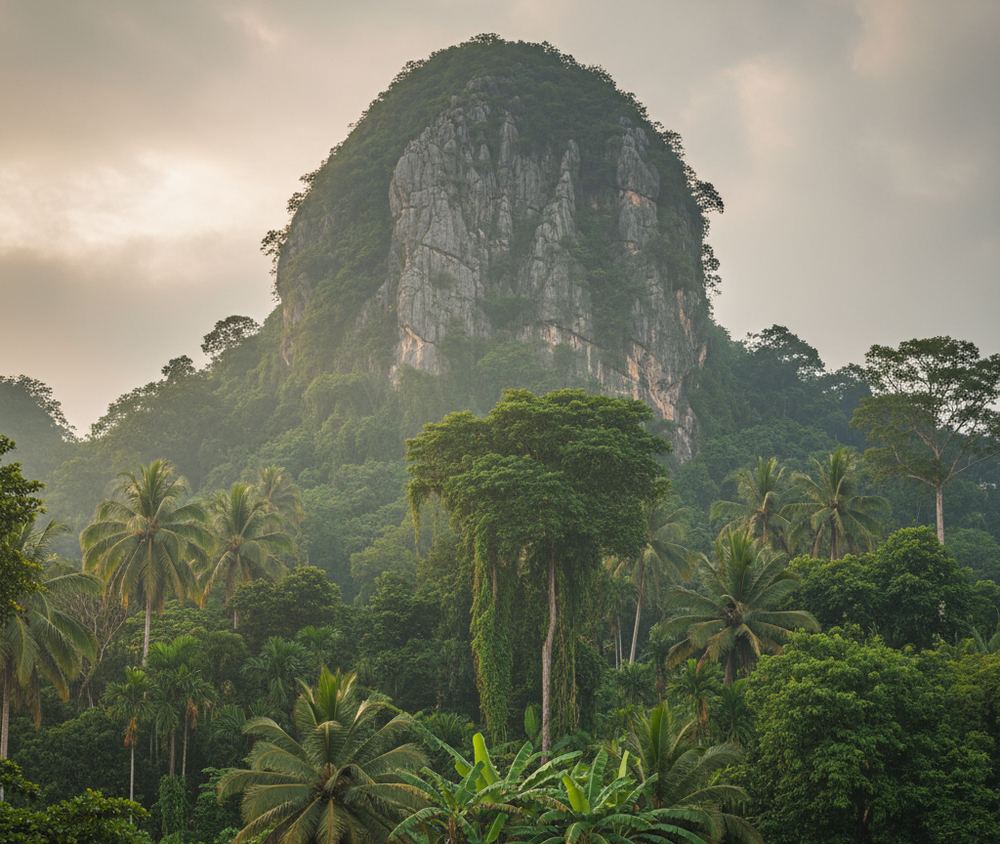
Four nights under the limestone
Ipoh is flat and the hills are not. Gray limestone stacks stand straight up out of the valley floor at the edge of town, and the town itself is two grids either side of the Kinta, the older one west of the water. It was built on tin in the 1880s and stalled when the price collapsed in the 1970s, which is part of why so much 1920s frontage is still standing.
Three of the temples are inside the rock. North of town one of them runs back into a painted chamber with a long stair climbing inside the hill to an opening high up. On the south side two more sit under the same ridge, one with a pond and a courtyard, the other cutting clean through the hill into a garden of still water on the other side. Bring shoes you can get off quickly.
White coffee is a real thing here and not a flavor: the beans are roasted with margarine, and it comes short and sweet in old shops with marble tables and tiled floors. Two of your four days go out of town. Gopeng is about twenty four kilometers south, where a cave system over four kilometers long runs back into the limestone. The hot springs are the other way, out on the northeast edge at Tambun, and they work better as an evening than an afternoon.
Why these two and not others
The office puts eleven of the sixty six possible pairings on the books, and this is one of them because the link between the halves is one train and nothing else. No connection, no change of station at either end, no night in a town you did not choose. Plenty of pairings on the map fail on that alone: two places four hours apart by road with nothing scheduled between them do not make one trip.
The second reason is that they do not repeat each other. George Town is dense, flat, on an island, and lived in at street level; Ipoh is a valley town with air around it and rock standing over it. Eat in both and you will notice the dishes change at the state line. A pairing of two shophouse towns would have been one trip told twice.
Who this suits and who it does not
This is a walking trip in a humid climate. The record for both towns is warm and wet in every month of the year, and nothing about your particular week is exempt from it. Count on covering seven or eight kilometers a day on pavement. If you need air conditioning between every stop, the island half will grind you down by the third afternoon.
The eating is the point and it is not a sit down affair. Stalls mean plastic stools, shared tables, cash, and a lot of pork and shellfish moving through the same kitchen, so anyone with a serious allergy or a strict diet should tell us at the request stage rather than work it out at the table. The temples want bare feet and covered shoulders. The caves want shoes you do not mind ruining.
Nine nights is two unpackings and one train, which suits people who would rather stay put and go deep than move every other morning. It does not suit anyone who wants a filled schedule handed to them. Outside the one departure time, nobody is expecting you anywhere, and if that reads as a gap rather than room, this is the wrong shape of trip.
The move in the middle
You start at the quay in the middle of George Town, a short walk from the stilt villages on the waterfront. The passenger boat crosses about three kilometers of strait to the mainland terminal, and the railway platforms sit inside the same complex, so you never step onto a road. If sailings are down that morning, the office puts you in a car over the road bridge instead and you reach the same platform.
The train south runs on the electrified west coast line and takes about one hour and forty minutes to Ipoh. It calls at Bukit Mertajam, Parit Buntar, Taiping and Kuala Kangsar, and the line runs through paddy and rubber country before the limestone starts. Seats are numbered and sold ahead, so yours are held well before you leave home. Departure times move with each timetable and are confirmed at the time of booking.
- How
- The west coast intercity electric railway, mainland station to Ipoh
- How long
- About one hour and forty minutes on the train, plus the water crossing before it
- How often
- Several departures spread through the day; posted times shift with each timetable and are confirmed at the time of booking
- Who runs it
- The office books both seats and the crossing before you leave home and hands you the reservation. Nobody meets you on the day.
Each end taken by itself
- Reserve the George Town vacation package, 5 nights, $1,460 on its own
- Ipoh vacation package in Perak, 4 nights, $1,120 on its own
Five nights in George Town booked on its own and four nights in Ipoh booked on its own come to 2580 dollars a person between them, and the pair is 2580 dollars a person.
Clocks that run this pair
- The train between the two towns leaves at a posted time on the day of the move. That is the one clock you keep in nine nights.
- The boat across the strait runs to its own sailing list. We put you on an earlier one than you think you need, because the train will not wait.
- The other eight days carry no fixed times at all. Temples, the funicular and the caves keep opening hours, but nothing is held in your name.
What the figure holds and what it leaves to you
Held inside the figure
- Nine nights of rooms, five in the old quarter of George Town and four in central Ipoh, two people sharing one room.
- Reserved seats on the intercity electric train from the mainland station opposite the island through to Ipoh.
- The water crossing from the city quay to the mainland terminal, or a car over the road bridge if sailings are down that morning.
- Breakfast at both places on every one of the nine mornings.
- A car and driver for one full day out of Ipoh, for the caves and the hot springs, starting at a time you set that morning.
- A written sheet for each town: which stalls open which nights, which temples want covered shoulders, and where the cash machines are.
Left outside it, on purpose
- Getting to the country and home again. The price begins the day you reach George Town and ends the morning you leave Ipoh.
- Any flight at all, and any boat beyond the strait crossing listed above.
- Meals other than breakfast, which on this trip is most of the eating.
- Entrance tickets for the funicular, the caves and the hot springs, all paid at the gate.
- Taxis and private cars inside either town on the days with no driver.
- Laundry, drinks, and anything bought at a stall.
A price on this site covers the ground only: the rooms, the named transfers between them, and the people who meet you. It does not cover getting to the country or leaving it.
Train times, sailing times and every opening hour on this page are checked and confirmed with you at the time of booking.
The months this pair holds together
The west coast of the peninsula does not have a dry season in the way most people mean it. Rain tends to arrive in the afternoon in short heavy bursts for much of the year and then stop. The long record puts the wettest stretch at both towns in the back half of the year, October heaviest at each, around 337 millimeters at George Town and around 307 at Ipoh.
January through March reads driest on that same record, and that is when walking for hours at a stretch is easiest to sustain. None of this is a forecast for your week. We set it out because it changes what you pack and how you shape an afternoon, not because anyone can tell you what the sky will do nine months from now.
Asked about this one more than once
- Can we run it the other way round, Ipoh first?
Yes. The line runs both directions and the nights split the same way, five and four. Most people take the island first, because the second half is quieter and suits the end of a trip. Tell us which order you want on the request form and we book the seats that way.
- Is the train time fixed, or do we choose it?
You choose from what is posted when we book. We usually put people on a mid morning departure so the whole move is finished before lunch and you get an afternoon in Ipoh rather than an arrival after dark. That single time is the only appointment in the nine nights.
- How much does getting to the mainland station add to the day?
Not much. The strait is about three kilometers across, the boat lands inside the same complex as the platforms, and the walk from the water to the train is under cover. Allow an hour from closing your room door in George Town to sitting down on the train and you will be early.
Reserve a month rather than a date
Tell the office which month you have in mind and it will answer with what that month makes possible and what it shuts.