Four nights in the old tin town
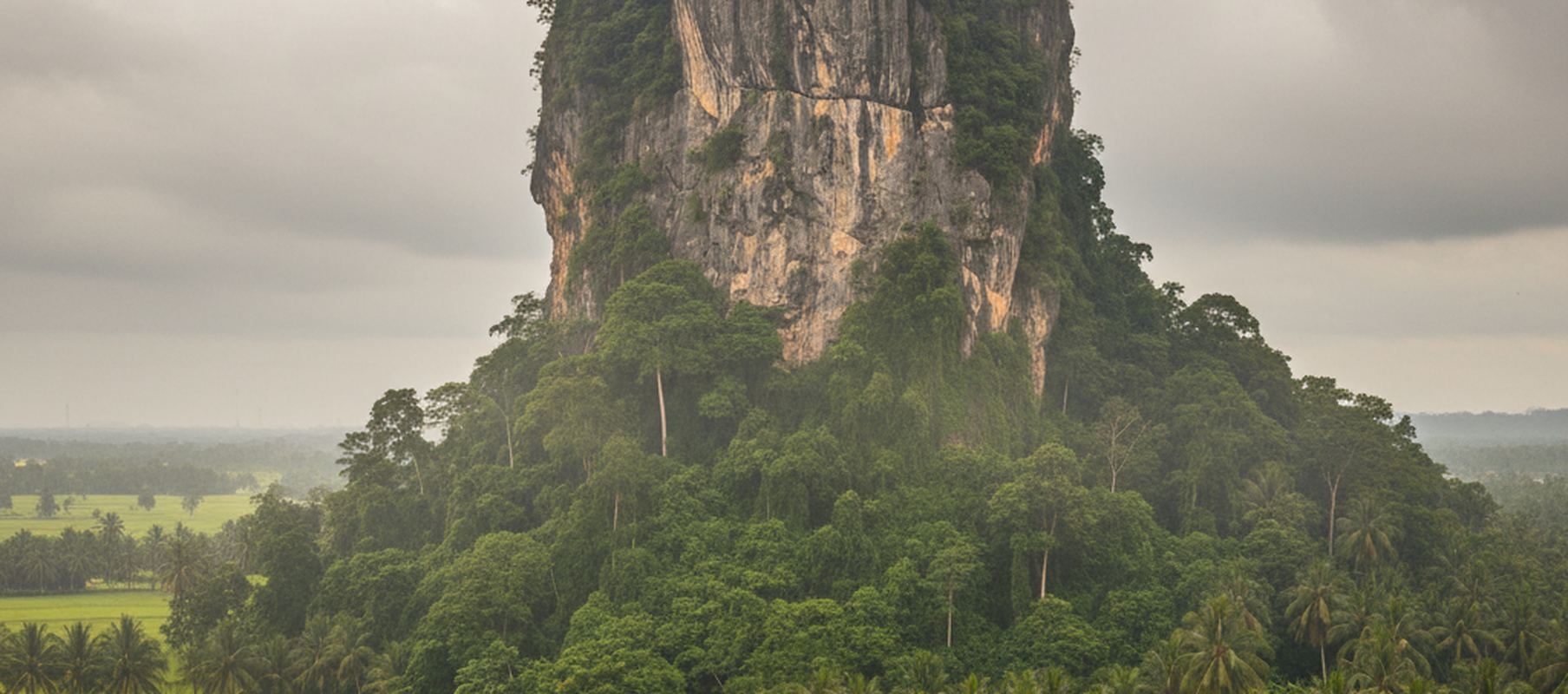
The Ipoh and Cameron Highlands vacation package starts on the flat, in a town that tin money built and then walked away from. Ipoh sits in the Kinta valley between the Titiwangsa and Keledang ranges, on a river of the same name, and the limestone comes up out of level ground in blunt gray lumps that geologists call mogotes. The first tin rush ran from 1884, dredging arrived in 1913, and when the price collapsed in the 1970s the city went quiet for decades. Four nights is enough to stop hurrying.
Days here are loose by design. White coffee was worked out in this town, the beans roasted with margarine to take the edge off, and it is drunk in old shophouses that open early and fill with noise. Bean sprout chicken is the other thing: poached chicken, a plate of fat sprouts, and either rice or flat noodles in soup. The old town sits on the west bank of the Kinta behind the railway line and you can walk all of it in a morning. There is a riverside path for a flat hour at the end of the day, and a hill trail at Bukit Kledang if you want to look back down at the whole valley.
The valley, on whichever days you choose
The cave temples are cut into the mogotes on the edges of town and they are working temples, not exhibits. Sam Poh Tong sits in a cluster with Ling Sen Tong and Nam Thean Tong, with a landscaped garden and a fish pond behind it. Kek Lok Tong opens out of the hill on the other side. Perak Tong holds more than forty Buddha figures and murals, including the largest such statue in the country. None of them takes a whole day, so people tend to string two or three together with lunch in between.
Further out, the valley keeps going. Gua Tempurung near Gopeng is the longest limestone cave in Peninsular Malaysia at more than 3 km, with a dry walk through the lit chambers and wet routes down the underground river that need a group of at least eight and get you soaked to the chest. Batu Gajah, about half an hour from the city, holds the unfinished mansion a Scottish planter left behind and, at Tanjung Tualang, one of the last tin dredges kept standing. Papan is a half deserted mining town with the forest coming back through it. The whole valley was made the second national geopark in the country in 2018, which tells you the mining is the point rather than a footnote.
Three nights at 1,440 meters
The highlands run from about 800 meters to 1,603 meters and the townships are strung along one road. Tanah Rata at 1,440 meters has the district council, the hospital and the bus station. Brinchang is higher at around 1,515 meters, Kea Farm higher again at 1,634 meters, and Ringlet sits lower at 1,127 meters on the way in from Tapah. The published averages put the mean at 18 degrees, with days rarely over 25 and nights dropping toward 9 or 12 at the upper settlements. Over 2,700 mm of rain falls in a year and October is the wettest month on the record at about 335 mm. Pack a sweater and something that sheds water, and expect to use both.
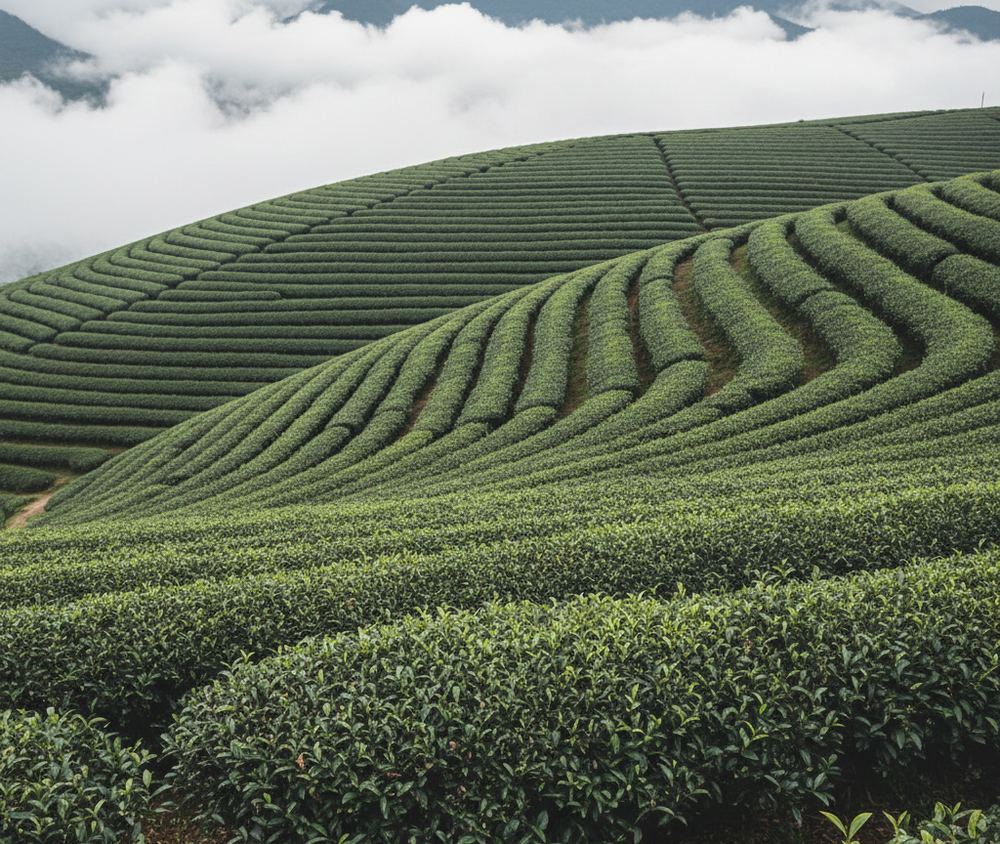
What you do with three days: the tea terraces above Ringlet and on the slopes north of Brinchang, cut to the contour so the rows run in stripes across the hill. The cloud forest on the ridge at Gunung Brinchang, 2,031 meters, is reached by a narrow lane off the estate road and ends in a boardwalk and a tower. Be warned that much of the ground moss went years ago under the traffic, so it is the stunted trees and the cloud sitting in them that you are there for. Numbered trails run 1 to 14 out of Tanah Rata, easy to hard, some of them five hours; number 14 has been shut since a landslide in February 2018 and signposting on the rest is thin. The farms sell strawberries by weight, around RM7 per 100 g to pick your own, and the market at Kea Farm runs daily.
How the seven nights actually run
One thing in this week answers to somebody else's clock, and it is the car on the morning of day five. Everything else you settle the night before over breakfast or in the room: which day goes to the temples, which to the cave, whether you drive out to the dredge at all. Two towns means two rooms and two unpackings, and that is the whole of the admin. The office books the rooms, books the transfer, writes the days out with distances and opening hours on them, and then leaves you alone. Nobody walks around with you.
Who would not enjoy this. Anybody hoping to fly the middle section, because there is no airfield up there and no flight is in this price. Anybody who cannot sit through a mountain road for two hours. Anybody who wants every hour spoken for, since five of the seven days have nothing written in them at all. And anybody arriving on a long public holiday, when the one road through the highland townships carries everybody at once and an afternoon disappears into it.
The move in the middle
There are two ways up and you should know which one you are on. The newer road is Federal Route 185, which leaves the trunk road at Simpang Pulai just south of Ipoh and was finished between 2001 and 2004. It is roughly 85 km from Ipoh to Kampung Raja at the north end of the highlands, then another half hour south on Route 59 through Kea Farm at 1,634 meters and Brinchang at around 1,515 meters to Tanah Rata at 1,440 meters. It is a two lane single carriageway with a design speed of 50 km/h and climbing lanes bolted on at the steep parts for slow lorries, and it is known for sharp corners. The older way is Route 59 itself from Tapah, 90 km end to end, built to mountainous standard with stretches posted at 40 km/h, narrow in places, shared with vegetable lorries coming down loaded, and prone to slips in the wet.
Now the honest part, because this is the piece people wave away. You go from a valley floor to over 1,600 meters without a flat kilometer, and the bends do not let up. People who never get carsick get carsick here. Sit in front if you can, eat light, and say early if you want the driver to pull over, because there are places to do it and it costs nothing. Add time as well: the single carriageway between Tanah Rata and Kea Farm clogs on holiday weekends, and it has been known to run for hours rather than minutes. Plan on arriving in the afternoon with nothing booked, and do not put anything after it on day five.
- How
- Road, and only road. A private car with a driver, or the public bus if you would rather.
- How long
- Two hours to two and a half by car, by way of Simpang Pulai. Scheduled buses out of Ipoh are quoted at two to three hours.
- How often
- One departure, yours, at an hour named on your sheet on the morning of day five. Buses run through the day as an alternative.
- Who runs it
- Not for anybody who cannot look at a phone in a moving car, and not for anybody who wants a straight road. There is no straight section between the valley floor and the ridge.
Each end taken by itself
- Ipoh vacation package in Perak, 4 nights, $1,120 on its own
- Cameron Highlands vacation package, three nights, 3 nights, $980 on its own
Two people sharing one room pay 2,100 each for seven nights, four in Ipoh and three in the highlands, which is 300 per person per night.
Clocks that run this pair
- Day five, morning: the car for the highlands leaves at the hour printed on your sheet. That is the only fixed time in the seven nights.
- Everything else is decided the evening before, including which day goes to the cave temples and which to the river walk.
- Onward travel after the last highland night is yours to arrange. The transfer in this price runs one direction only.
What the figure holds and what it leaves to you
Held inside the figure
- Seven nights of rooms, four in Ipoh and three in the highlands, two people sharing one room.
- The road transfer between the two, private car with a driver, one direction, door to door.
- A written day sheet for each town: distances, walking times, and opening hours where they are published.
- Booking and written confirmation of both rooms in your own names.
- One number in Malaysia that answers during Malaysian working hours while you are there.
- Breakfast at those rooms where the rate already carries it, stated property by property on your sheet.
Left outside it, on purpose
- Getting to Malaysia and getting home again. No flight of any kind sits in this price.
- The run from the airport to Ipoh at the start, and anything onward from the highlands at the end.
- Every meal except the breakfasts noted above, and every coffee, which in this town is the point.
- Entry charges: the cave, the cave temples, the dredge, the mansion, the farms, the tower on the ridge.
- Local transport inside each town, including taxis and any car you hire for a day of your own in the valley.
- Guides. Nobody from this office walks the trails or the temples beside you.
A price on this site covers the ground only: the rooms, the named transfers between them, and the people who meet you. It does not cover getting to the country or leaving it.
You confirm both rooms, the pickup hour on day five, and which way the driver goes. If Route 185 is closed by a slip, the driver goes round by Tapah, the drive gets longer, and the office tells you that before you leave the room rather than in the car.
The months this pair holds together
These are two climates seven nights apart. Ipoh is lowland tropical, averaging around 28 degrees with roughly 2,897 mm of rain in a year, so there is no cool stretch down there, only wetter and drier ones. The highlands sit at the same latitude and behave nothing like it: mean of 18 degrees, days seldom over 25, nights toward 9 at the higher settlements, and more than 2,700 mm of rain a year with October the wettest month on the record.
Two practical consequences. Up there the ridge road and the trails are done in the morning by local habit, which leaves the afternoon for the market and the farms, and it also means the tower gets busy from about ten. Down in the valley the caves and the temples do not care what the sky is doing, so a wet day costs you nothing. Slips close sections of the old Tapah road in the wet season and one numbered trail has been shut since 2018 for the same reason. Malaysian school holidays and long weekends fill the single carriageway between the townships, so if your dates can move, move them off those.
Asked about this one more than once
- Can we fly between the two halves instead of driving?
No. There is no airfield in the highlands and no flight in this price at any point. The join is a road, two hours to two and a half of it, and that is what makes this one trip rather than two.
- How rough is the road for somebody who gets carsick?
Rough. You climb from the valley floor to over 1,600 meters on a two lane road with sharp corners and no flat kilometer, at a design speed of 50 km/h, and people who are fine on motorways are not fine here. Sit in front, eat light, and tell the driver early that you may want to pull over.
- What do we actually need to pack for the upper half?
Something warm and something that sheds water. The published mean up there is 18 degrees with nights toward 9 at the higher settlements, and the annual rainfall is over 2,700 mm. Walking shoes with grip if you mean to use the numbered trails, because the ground stays wet under the trees.
Reserve a month rather than a date
Tell the office which month you have in mind and it will answer with what that month makes possible and what it shuts.