One trip with a join in the middle
This east coast Malaysia vacation package is one booking split three nights in Kota Bharu and four in Kuala Terengganu, with the road between them counted as a day of the trip rather than a transfer to be endured. Kelantan comes first because its market works earliest and its craft sheds sit along one road north of town. Terengganu comes second because the river mouth rewards the slower half of a week. You stay on the mainland throughout. This office arranges no sea passage, so the offshore islands are not part of it and nothing here waits on a boat.
The order matters, because the two halves run at different speeds. Kota Bharu is a town you work through before nine and retreat from by one. Kuala Terengganu is a town where you follow the river, then the shophouse lanes, then the river again, and four nights is about what that takes without rushing. Reversing the split puts the longer stay where you still have the legs for a market, and wastes it.
Kota Bharu, three nights
The central market is a tiered hall with galleries stacked around an open well, traded mostly by women, and it does its real business very early. Ground level is wet: fish, herbs, banana leaf, coils of budu. Climb and it goes dry and then textile, with brassware and folded cloth on the upper levels. Be inside by seven and you watch it work. Turn up at eleven and you watch it pack. The museums sit together around the padang, including Istana Jahar, a timber palace of 1855 now holding the state collection of royal custom, and Istana Batu beside it.
The craft road runs north of town toward Pantai Cahaya Bulan. Batik stretched on frames, songket looms with the metal thread already wound, silversmiths, and the sheds where kites are cut and pasted. These are workplaces, not showrooms, and they keep working hours. Kelantan food leans sweet in a way the rest of the country does not: more coconut milk than anywhere else in Malaysia, curries richer for it, and palm sugar turning up where another state would reach for salt. Nasi kerabu and nasi dagang are the two to start with. If sweetness in savory food irritates you, three days here will feel like five.
Kuala Terengganu, four nights
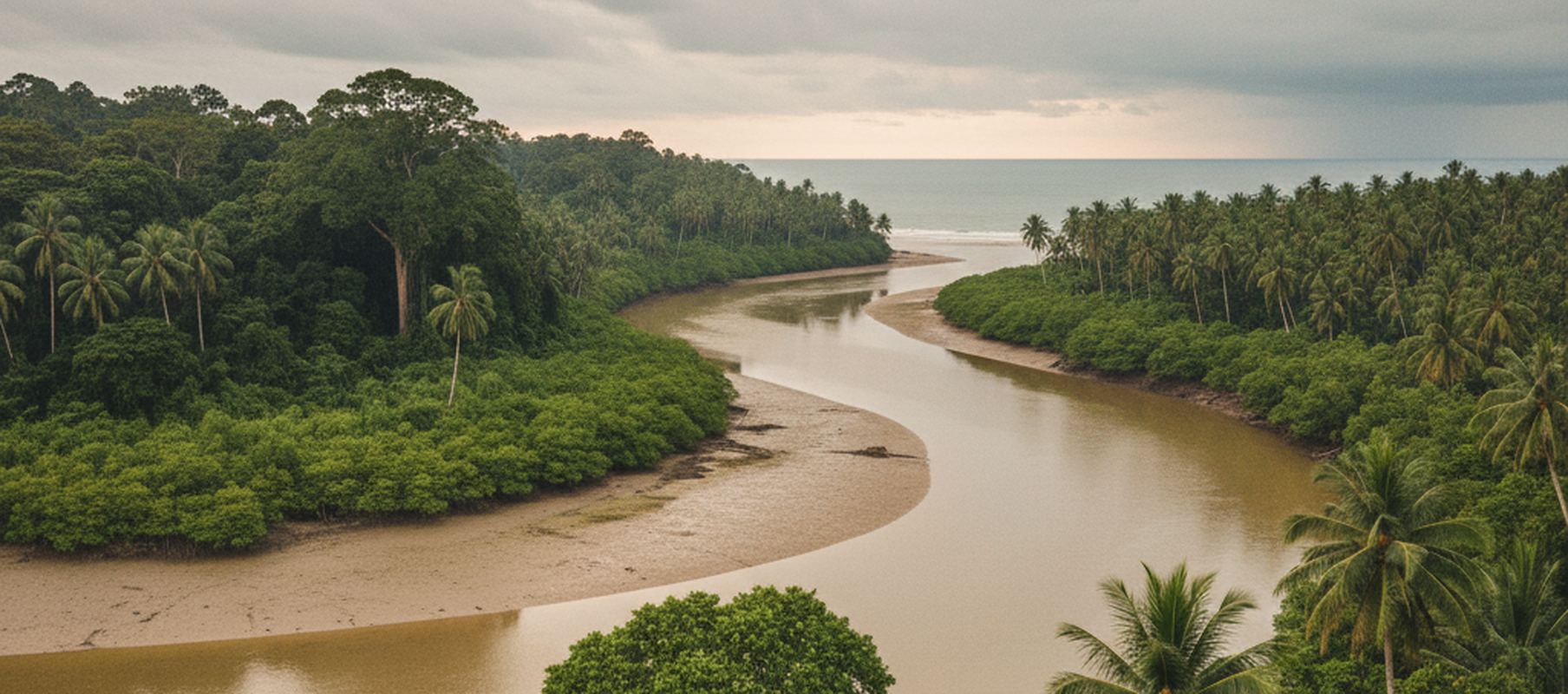
The town sits on the estuary of the Terengganu River, which splits it in two, and everything worth your morning is within sight of the water. The fishing boats come in against the bank. The market has brass, songket and batik on the floor above the produce. Chinatown is two rows of shophouses, some of the stock dating back to the seventeen hundreds, with temples between them, old coffee shops that open early and shut early, and back lanes that have been painted up in recent years. The jetties on that side are still used, which is the part people do not expect.
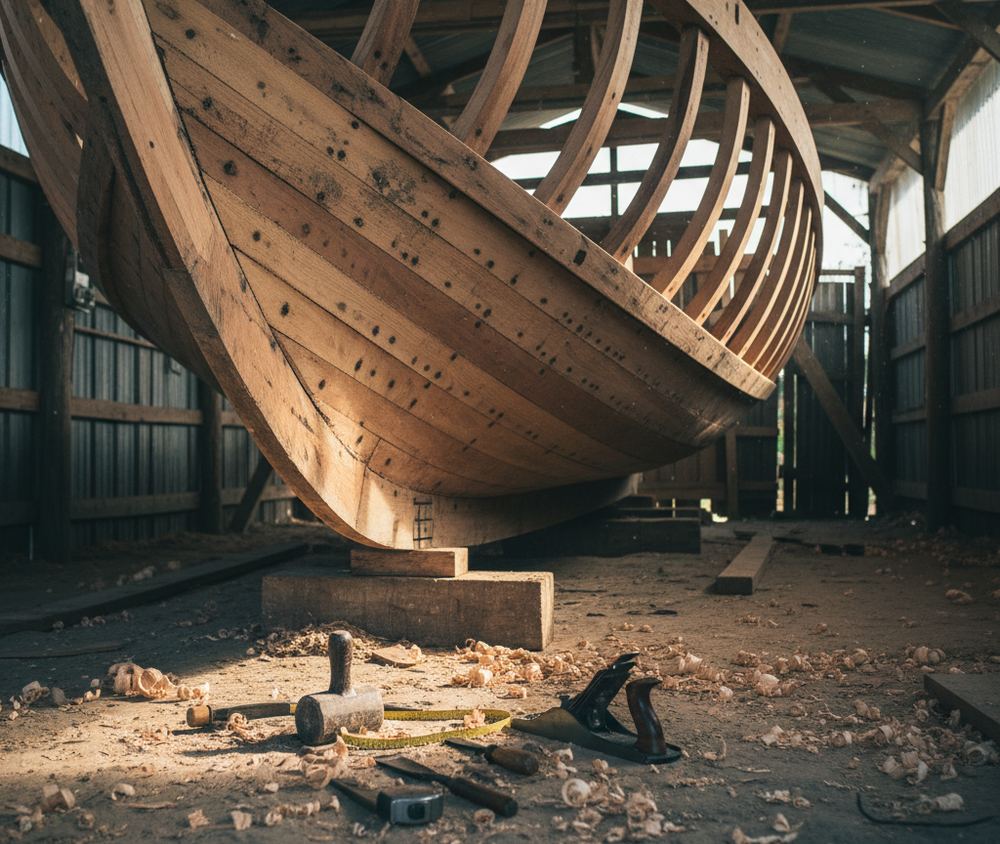
Pulau Duyong lies in the mouth of the river and you reach it over the Sultan Mahmud Bridge, by road, not by boat. Boats have been built and repaired there since before independence, shaped in wood and fastened without nails. The trade has thinned, and this matters for what you should expect: there may be a hull on the blocks the week you come, or there may be nobody at the saw. No one can arrange that. What does not change is keropok lekor, ground fish worked with sago, sold fried or boiled from stalls along the roads out of town. Four flat, hot, unstructured days suit some people completely and bore others by the second afternoon.
The working week runs Sunday to Thursday
Kelantan and Terengganu both take Friday and Saturday as the weekend and work Sunday through Thursday. Because both sides keep the same one, crossing the state line partway through the trip does not reset the calendar, which is the assumption most visitors arrive with. What it does mean is that two of your seven days are the local weekend, and they are not the two you are used to. The Terengganu State Museum posts Saturday to Thursday, nine in the morning until five in the afternoon, and closes on Friday. Craft workshops, being small family operations, go quiet across both days.
Markets are the part that holds up, because fish will not wait for an office to open, so the early hours keep going. Everything that needs a person at a bench or a key in a display case does not. The practical shape is this: put the workshops, the looms and the museums into Sunday through Thursday, and put the road day, the riverbank and a long sit in a coffee shop on the Friday. Plan a Friday around a silversmith and you will find a shut door and a wasted morning.
The move in the middle
The two towns are about 160 kilometers apart on the trunk road that follows the coast south. Straight through, the drive is a little over two hours. You leave Kota Bharu and pass Bachok, Pasir Puteh and Jerteh, then Besut, then Setiu and Bandar Permaisuri, then Kuala Nerus and the bridge into Kuala Terengganu. There is a through bus between the two towns, but it goes once a day, which is to say it leaves when it leaves, takes longer than the car, and will not pull over because you saw something.
So a car with a driver for the day is the sensible arrangement, and it is what this booking uses. It turns the move into the one loose day of the week: a market town at Jerteh, a run of fishing settlements, sheds by the road turning out keropok lekor while you wait. Allow the whole morning and the early part of the afternoon. If you would rather just get there, say so and the driver will do it in a little over two hours with one stop.
- How
- Car and driver, coast road south on Federal Route 3
- How long
- About two hours twenty minutes of driving, half a day if you stop
- How often
- Your car runs on the day you pick. The scheduled through bus runs once a day.
- Who runs it
- A driver the office books locally. The car is yours for the whole day, not just the distance.
Each end taken by itself
- The Kota Bharu vacation package, 3 nights, $890 on its own
- Kuala Terengganu vacation package, 4 nights, $1,180 on its own
Seven nights, two towns and one road south. About half the week answers to market hours and posted opening days. The rest of it is yours to waste.
Clocks that run this pair
- The Kota Bharu central market trades hardest between roughly six and nine in the morning. By midday the galleries are thinning and by mid afternoon much of it has gone.
- Craft workshops on the road north keep daytime working hours, Sunday through Thursday, and shut across the Friday and Saturday weekend.
- The Terengganu State Museum posts Saturday to Thursday, nine in the morning to five in the afternoon, closed Friday.
- The road south is taken on one day chosen when you book, so that the driver is held and both sets of room nights line up around it.
- Boat yard work on Pulau Duyong happens during weekday working hours. Whether a hull is under construction in your week is not something the office can arrange or promise.
What the figure holds and what it leaves to you
Held inside the figure
- Seven nights of rooms, three in Kota Bharu and four in Kuala Terengganu, priced per person on two people sharing one room.
- The coast road south with a car and a driver held for the whole day, stops along the way included rather than charged extra.
- A morning on foot through the Kota Bharu market galleries with someone who knows which stair leads to which floor.
- A guided half day along the craft road north of town, scheduled onto a working day so the sheds are open.
- A morning at the Kuala Terengganu river mouth and the crossing by road to the boat yards on Pulau Duyong.
- A written schedule listing posted opening days and hours for everything that keeps them, checked again in the week you travel.
Left outside it, on purpose
- Getting yourself to Malaysia and onto this coast. The price starts when you are standing in Kota Bharu and finishes when you are standing in Kuala Terengganu, and it covers nothing before or after that.
- Any passage by sea, and with it every offshore island. This office arranges no boat of any kind, will not hold a seat on one, and will not book one on your behalf if you ask at the counter.
- Meals beyond whatever your room rate happens to carry, which along this coast usually means breakfast and nothing else. Everything else you eat, including the stall food, you pay for as you go.
- Admission charges at the palaces and museums around the padang in Kota Bharu and at the state museum in Terengganu. These are paid at the door on the day of your visit.
- Flights of any description, rail tickets and any long distance coach seat. None of these are sold, held or ticketed by this office at any point in the booking.
- Anything that depends on the weather, on a workshop opening on a day it does not post, or on a wooden hull happening to be under work on Pulau Duyong in the week you arrive.
A price on this site covers the ground only: the rooms, the named transfers between them, and the people who meet you. It does not cover getting to the country or leaving it.
The office holds the seven nights, the driver for the road day and the two guided mornings, then sends you a written schedule with posted days and hours against each item. Nothing is charged on this site and no card is asked for.
The months this pair holds together
This is the pair in the catalog most exposed to the northeast monsoon, and it is not a close contest. The rain reaches this coast around the start of November and holds through February, running on into March in some years. It is not a passing shower. Rivers rise, the trunk road floods in places, and Kelantan in particular has a long history of water standing in its towns. Workshops shut, stalls stay closed, and a drive that takes a little over two hours in March can turn into a day of sitting and waiting. The office will book these months if you insist, and will tell you plainly beforehand that it does not recommend them and cannot reopen anything that has closed.
March through September is the workable stretch. It is hot, humid from early, and the light gets hard by mid morning, which pushes your day into the shape the towns already keep: out at six, back in by one, out again at five. The usual pattern is heat building through the morning and a chance of rain later on, though nobody can tell you in advance what any given week will do. Almost nothing on this trip needs a clear sky, which is one real advantage of a week built around covered markets, working sheds and shophouse lanes.
Asked about this one more than once
- Can I make the road day on my own instead of taking the car?
You can. There is a through bus between the two towns, but it runs once a day, it takes longer than the drive, and it will not stop at Jerteh or beside a roadside shed because you would like it to. Taken that way the day becomes a transfer instead of part of the trip. Tell the office either way, because the rooms at both ends are booked around the date you move.
- Why is the week arranged Sunday to Thursday?
Kelantan and Terengganu both keep Friday and Saturday as the weekend and work Sunday through Thursday. Since both states keep the same one, crossing from the first town to the second changes nothing about the calendar. In practice the state museum posts Saturday to Thursday and closes on Friday, while the craft workshops go quiet across both days, so Friday is where the road day or a slow riverside day belongs.
- Does putting the two towns into one booking change the price?
No. The figure is the two stays added together and nothing comes off for pairing them. What pairing buys you is the day in the middle: the coast road arranged as part of the trip, a driver held for it, and the room nights at both ends booked around the date you travel rather than left for you to solve on the morning.
Reserve a month rather than a date
Tell the office which month you have in mind and it will answer with what that month makes possible and what it shuts.