Two days, and the clock is not yours
A Kuala Kangsar vacation package of this length is short, and the town knows it. The museum in the old palace at Bukit Chandan publishes hours of nine to five. The gallery further up the road publishes a midday break on Friday. The mosque runs to prayer, not to visitors. So you work outward from three sets of hours and fit the river, the food and the walking into the gaps.
Day one is the hill. Jalan Istana climbs from the town to Bukit Chandan, and the mosque, the burial ground beside it, the old timber palace and the second palace up the slope all sit within a few hundred meters of each other. Day two is the flat part: the river bank, the clock tower roundabout, the shophouse blocks, and the crossing to the potters on the far side.
Who would not enjoy this: anybody who wants a full program. Two nights here is a slow town, two museums, a craft you have to go and find, and a lot of sitting by water. Nothing is arranged for visitors after dark, and the evening is whatever the shophouse kitchens near the roundabout happen to be doing.
The old palace, and what the wood is doing
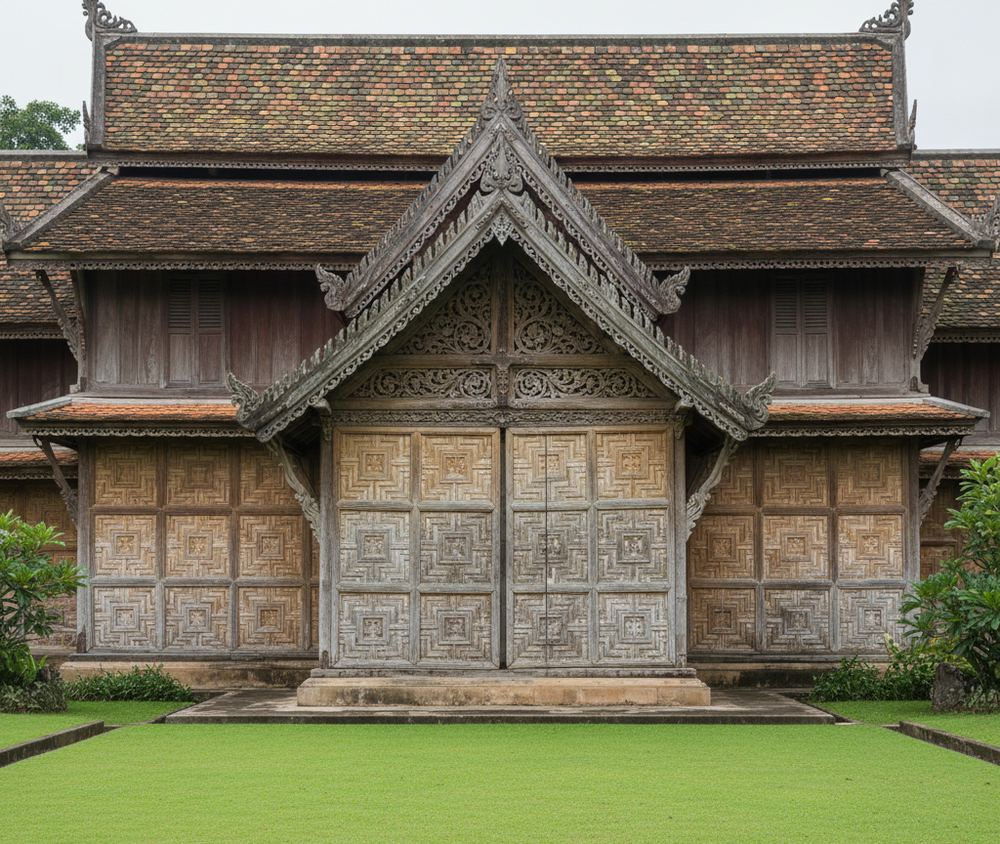
Istana Kenangan went up in 1926, after the river got into the old riverside palace. A Malay carpenter and his two sons built it: two stories, hardwood frame, and wall panels that are woven rather than planked, which is the part worth standing close to. It opened as the Perak Royal Museum in November 1986. The floor underfoot is marble now; the original was timber.
Inside are regalia, textiles, genealogy boards and furniture. It is not a large building and you will not need a whole morning unless you read every case. The department that runs it publishes an address and a telephone number and no hours at all, so the office asks by telephone for your dates and sends you what it is told. If your dates land on those, the office moves things around them.
Five hundred meters on stands Istana Hulu, finished in 1903, later a school, now the gallery. It has been shut for conservation work with a reopening announced for this year, so it is the one thing on this trip that may or may not be open. The office asks in writing and tells you the answer before anything is held.
Bukit Chandan and the mosque on Jalan Istana
The Ubudiah mosque was begun in September 1913 and finished late in 1917, to a design by A. B. Hubback, who also drew the Ipoh and Kuala Lumpur station buildings. White render, bands of Italian marble, one large gold dome, four minarets and turrets with smaller gold domes. It is smaller in person than photographs suggest. It was gazetted as a national heritage building in 2012.
It is a working mosque, not an exhibit, and it keeps no visitor hours. What you get to see depends on the prayer times that day and on who is at the door. Friday around midday is the congregation, and the gallery up the road publishes a Friday break across the same hours. Cover arms and legs, women cover hair, shoes off at the step.
Next to the mosque is the royal burial ground. Further up the slope stands Istana Iskandariah, finished in 1933 and a residence, so it is something you look at from the road and nothing more. Elsewhere in the town is the Malay College and its Big School, opened in December 1909, a pseudo Greco Roman front with a rugby field before it. That is a boarding school in session, so you look from the perimeter.
The flat day: water, shophouses, one old tree
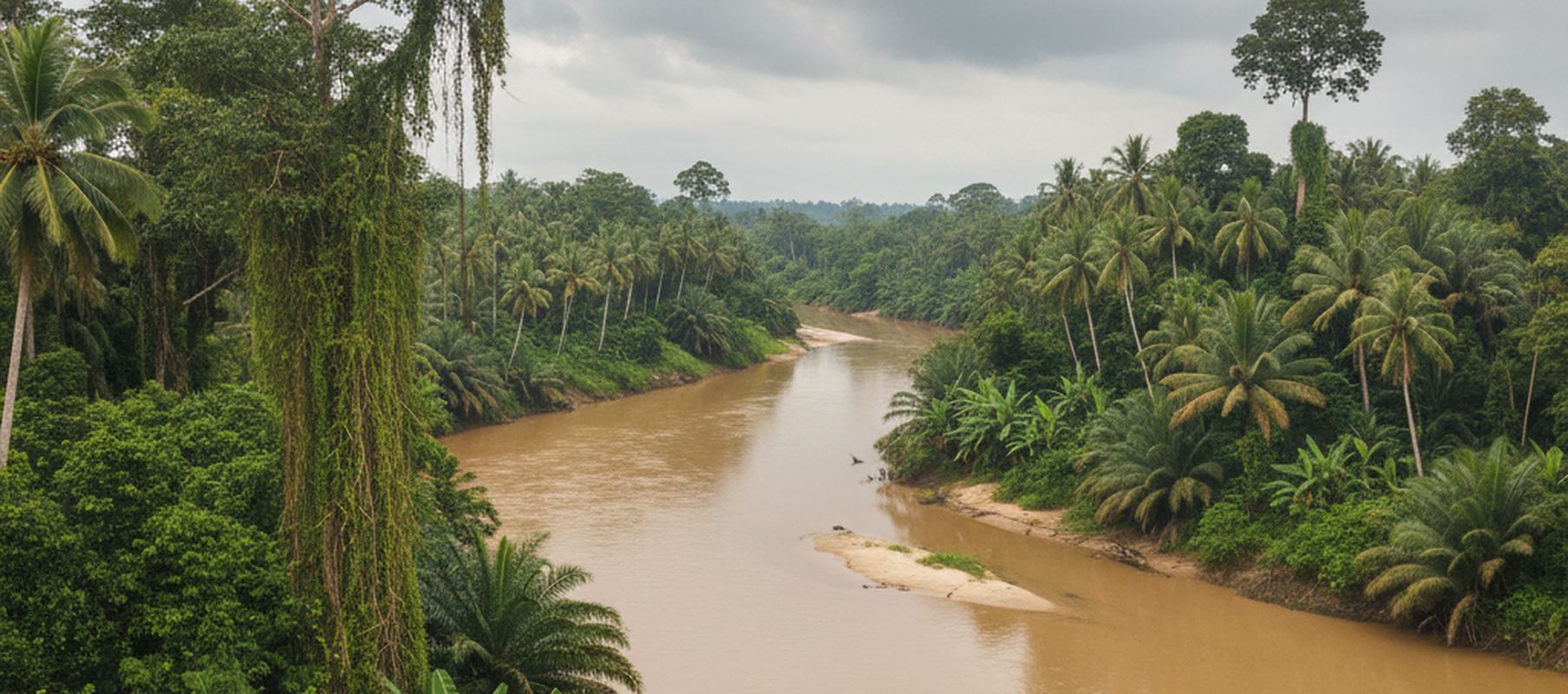
The Kangsar joins the Perak at the town, which is where the name comes from, and the bank is where people actually sit. It is a wide, silt colored river, and the far side is a separate errand rather than a stroll. Two bridges cross to Sayong. A concrete road bridge sits near the town and a steel one stands further upstream.
The clock tower stands in the middle of town and does duty as a traffic roundabout, which tells you the scale of the place. Around it are shophouse rows and the kitchens under them. The part you can cover on foot is genuinely small, and the palaces and the mosque are a climb up out of it rather than a drive.
The rubber tree stands in the grounds of the district office. It is the one survivor of the first planting in the country, and it is a tree, so manage your expectations accordingly. Accounts differ on the year and on whose idea it was, which is worth knowing before somebody tells you one version with a lot of confidence.
Across the water to the gourd makers
Sayong is on the far bank, and the labu sayong is the gourd shaped water pot made there as a household industry rather than a factory one. Clay is raised by hand, stamped with a pattern using cut wood, dried, then fired high. The blackening is a second step: the hot pot goes into rice husks, which catch and smoke, and the surface comes out dark.
The pot is porous on purpose. Water seeps through and evaporates off the outside, which pulls the heat out of what is inside, so water left in one overnight comes out cool. That is the whole point of the object, and it is a sensible thing to carry home if you can pack it, because it is fired clay and it breaks.
The other craft here is tekat, gold thread laid onto cloth, and it is done in workshops rather than shops, so it has to be arranged. On the food: the laksa is made with vermicelli pressed fresh rather than dried, and the other thing to ask for is masak lemak ikan patin, river catfish in coconut milk with chili. Neither of them is a dining room occasion.
What here answers to somebody else and not to you
- Perak Royal Museum at Istana Kenangan, Bukit Chandan: the museum publishes no hours of its own, so the office telephones for your dates and writes down what it is told. Both Hari Raya periods move everything and are checked first.
- Galeri Sultan Azlan Shah in Istana Hulu: published hours are Saturday to Thursday, ten in the morning to five in the afternoon, with Friday split by a midday break. The building has been closed for conservation work with reopening announced for 2026, so its status is confirmed in writing before your dates are held.
- Ubudiah Mosque, Jalan Istana, Bukit Chandan: a working mosque with no published visiting hours. What you can see is set by the five daily prayers and by the Friday midday congregation, and the answer can change on the day.
- Sayong pottery: household workshops, not a visitor building, with no posted hours. The visit is arranged ahead or it does not happen.
- Public holidays and the two Hari Raya periods move museum, workshop and kitchen hours together. Dates falling inside those weeks are rebuilt rather than squeezed.
The hatching beside each price says how much of the trip runs to somebody else's timetable: one line for none of it, four for a trip built around fixed departures from the first morning to the last.
What the figure holds and what it leaves to you
Held inside the figure
- Two nights in a small town property, simple standard, private bathroom, twin or double, priced per person on two people sharing one room.
- Ground transport within the district across both days, including the crossing to Sayong and back.
- Entry arranged and paid at the royal museum, and at the gallery in Istana Hulu if it is open on your dates.
- A written walking route for the town center and for Bukit Chandan, with the published hours of each building set against it.
- A pottery visit at Sayong arranged in advance with a working household.
- Breakfast on both mornings and one sit down meal built around the local laksa and the river fish.
Left outside it, on purpose
- Getting to Malaysia and getting to Perak. This price covers ground arrangements only and begins once you are in the country.
- Any flight and any sea passage. The office arranges neither and quotes neither.
- Meals other than the ones named above, and all drinks at any time.
- Entry to the gallery in Istana Hulu if the building is still closed for conservation on your dates, in which case that sum is not charged to you.
- Anything you buy at the potters, including the pots themselves and packing them for the journey home.
- Laundry, telephone and anything else charged back to the room.
- Tips, and personal spending of every kind.
A price on this site covers the ground only: the rooms, the named transfers between them, and the people who meet you. It does not cover getting to the country or leaving it.
Nothing is held until the office has written to the museum and to the gallery for your exact dates, has the hours back in writing, and has forwarded both replies to you.
The months this one is worth the journey
Perak sits inland on the western side of the peninsula, and rain here behaves like an afternoon event rather than a season. The wetter stretches tend to fall in the two inter monsoon periods, roughly April into May and again from late September into November. Nothing on this trip shuts because of rain. The climb up the hill just becomes hard work, and the river bank stops being somewhere you want to sit.
The two Hari Raya periods move more than the sky does. The museum publishes closure across the first two days of each, workshops go quiet, and kitchens keep their own hours. Those dates shift against the calendar you use at home, so the office checks them against your dates before anything else and builds the two days afterward. If the gallery has reopened by then, its Friday break is the other fixed thing to plan around.
What this one will join to
- Two town Perak vacation package, Train on the electrified main line, or the road., Under an hour whichever you pick. The track between the two stations measures 28.2 km, station post to station post. By road it is about 35 km.
Send the dates you have in mind and the office will come back with what is open on them before it prices a single night.
Asked about this one more than once
- Will the gallery at Istana Hulu be open when we come?
It has been closed for conservation and a reopening was announced for 2026, which is not the same thing as a confirmed date. The office writes for your dates and passes on whatever comes back. If it is still shut, that entry cost comes off your price and the second morning goes to the river bank and the town instead.
- Can we see inside the Ubudiah mosque?
That question has no standing answer. It is a working mosque with no published visiting hours, so what you see depends on the prayer times that day and on who is at the door. Dress covered, arms and legs, hair covered for women, shoes off at the step, and take the answer you are given.
- Is two nights enough here, or is it too many?
Two nights suits you if you want the buildings, the craft and the water at a slow pace. It is too many if you want something scheduled every hour, because there is no such thing here. About half of these two days is set by hours that belong to somebody else, and the rest is walking, sitting and eating.
Reserve a month rather than a date
Tell the office which month you have in mind and it will answer with what that month makes possible and what it shuts.